Showing posts with label new media. Show all posts

Wednesday, November 18, 2009

Reflections

In the span of three months which I’ve spent writing on issues of document designing and posting them up on this blog, I have acquired a lot of experience and learnt many new things regarding new media.

Such as the proper designing for online versus print, the development of blogging communities, the classification of the different kinds of blogs as well as ethical issues relating to blogging.

A blogger should be aware of the Do’s and Don’ts of the online media as well as being alert and open to constant change and updates of the Web 2.0.

Some important points to remember as a good document designer and web user:
  • Keep it short and simple (Nielsen 1995)
  • Visuals are very important! (Putnis & Petelin 1996, p. 241)
  • Respect others on the web; an anonymous alias would not keep or hide you from the persecution of the law.
Finally I’d like to thank all of my blog readers for all the kind comments and useful critiques, it has been an experience!


Image Source: Rman

References
Nielsen, J. 2005, Weblog Usability: The Top Ten Design Mistakes, viewed November 12 2009, http://www.useit.com/alertbox/weblogs.html

Putnis, P. & Petelin, R. 1996, ‘Writing to communicate’, in Professional communication: principles and applications, Prentice Hall, Sydney, pp. 223-263.

Tuesday, November 17, 2009

New genre & usability

With the advent of new media and specifically the Internet, the throes of journalism are a-changing.

And the news networks better know it.

In ‘Michael Jackson's death and its lessons for online journalists covering breaking news’, Robert Niles criticized certain news organisations for being slow on the uptake of the coverage of Michael Jackson’s death back in June 2009.


Twitter crashed from overcapacity on Michael Jackson's death day

Newsrooms are forced to re-examine how they handle breaking news in an increasingly hyper, competitive, instant-publishing environment (Niles 2009b). Internet users worldwide are not depending on traditional media for major breaking news anymore; they utilize Web 2.0 tools like Twitter and Google, and the news offices better jump in the wagon and go with the flow if they want to keep up.

In the article, Niles (2009b) state that reputable news organisations need not fall in line behind sources like celebrity gossip site TMZ when major news break. They should not fear acknowledging that they know that the report is out there and people are talking about it, and that they have a team out there to get the full confirmation.

Therefore Niles (2009b) advises news networks to divide people to do the actual reporting, and also not leave out the constant updating of news through the Internet. As quoted, he shares that “The worst thing you can offer you readers on Twitter is silence.”

“Report on your reporting, if that's all you have. Readers will appreciate the transparency.”

Even if a major news network does not have the luxury of reporting a news before full confirmation unlike gossip sites or social networking sites (Media Bistro 2009), it is still depended on to offer fast and instant updates. Or else it would just open them to embarrassment and give the impression that they do not have efficient people researching and reporting.

CNN experienced it in early June when they failed to provide live coverage of live protests of Iranians over elections issues, and the hashtag #CNNFail became one of the top trending topics on Twitter (Niles 2009a).

People and netizens want fast and credible instant updates, and the requirements are growing every day. And the news people better give them that, or lose their audience.

References
Niles, R. 2009, ‘Lessons for online journalists from #CNNFail and the Iran uprising’, Online Journalism Review, viewed November 17 2009, http://www.ojr.org/ojr/people/robert/200906/1752/

Niles, R. 2009, ‘Michael Jackson's death and its lessons for online journalists covering breaking news’, Online Journalism Review, viewed November 17 2009, http://www.ojr.org/ojr/people/robert/200906/1755/

Media Bistro 2009, Twitters Of Patrick Swayze's Death Greatly Exaggerated, viewed November 17 2009, http://www.mediabistro.com/fishbowlla/show_business/twitters_of_patrick_swayzes_death_greatly_exaggerated_116909.asp

Monday, November 16, 2009

New genre & political campaign

In the article Obama uses iPhone to win support, Shiels (2008) shares that the use of new technology is vital for politicians nowadays to get more votes in.

During the 2008 Obama presidential campaign, volunteers help develop a “Call Friends” application feature which helps organize contacts in swing states, so that the user would find it easier to call friends and families to “make sure they are registered and voting for Barack.” Other features include up-to-date news, video and photos made available to help convince potential voters.

A co-developer Raven Zachary states that “This would be a beginning of a new wave of mobile technology, designed to help political candidates.”


Image Source: iphone
Obama specially-designed iPhone application tool as part of political campaign

Why the shift to use of the latest technology in politics? When did it start, and was it a gradual process? And most importantly, it is really effective on the audience?

Firstly we have to understand that the developing of the iPhone tool is a wise insight in the case of Obama’s campaign managers. They took the chance in delving in the fact that the iPhone is a new and popular device especially among young adults (who, remember - are of voting age!) to bridge a ‘deeper’ connection with them and improve voting turnout amongst the 18-24 age category (Sloustcher 2008).

To make use of the iPhone application tool effectively, the campaign managers have to understand the genre conventions and change, from mainstream media to a more private and individual form which is to each voter personally. As different forms /genre bring with it a different social experience, therefore different meanings are applied onto the genre.

The function of this application tool should be matched with its users’ habits, expectations, and context of use (Penman 1998).

One cannot change the genre without changing the meaning, or the interpretation of the text. Whereas genre is decided by the audience, purpose and context factor, which differs for both mainstream media readers and the iPhone users.

In the latter, the audience would be the younger, more technologically updated working generation who are of voting age. The purpose of the creation of the application tool would be to update them on the advancement and news of the campaign as well as try to ‘convert’ them into Obama supporters and then to translate that into physical votes on campaign day. As for the context, it would be available for download to all iPhone users who are eligible to vote in the US.

Therefore the proper genre change should be understood to achieve the correct aims and goals

Oh, and did it really work on the audience? We would never know the real level of effectiveness, but it must have helped.

Obama won the presidential election.


Image Source: SmugPlugs

References
Penman, R. 1998, 'Document structures and readers’ habits', Communication news, vol 11, no. 2, pp. 1 & 10-11.

Shiels, M. 2008, 'Obama uses iPhone to win support', BBC News, viewed November 16 2009, http://news.bbc.co.uk/go/pr/fr/-/2/hi/technology/7649753.stm

Sloustcher, M. 2008, 'Obama iPhone App – Digital Propaganda or Communications Genius?', Pepper Digital, viewed November 16 2009, http://pepperdigital.typepad.com/pepperdigital/2008/10/obama-iphone-ap.html

Saturday, November 14, 2009

The emergence of New Media

In the International version of Kindle out for Christmas article by Mike Harvey (2009), it discusses the emergence and popularity of an e-book reader which is popular majorly among US citizens, 50 years old and above (Abbott 2009).

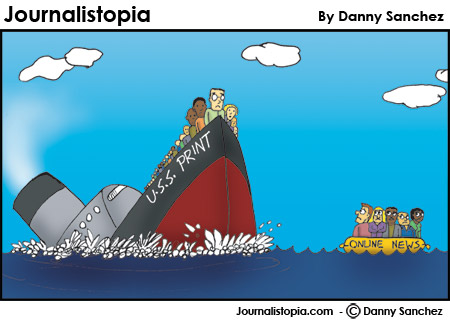
Would the emergence of e-books threaten print media? That is the question that publishers are pondering. However some media pundits predict that old media would still exist as different audiences have different likings on how they get their information (Paterson 2008).

But it cannot be denied that there would still be competition between the two forms of media. How would they survive together?


Image Source: USS Print
Would print media sink?

According to Mercieca (2004) the popularity of the e-book is increasing by the day as it is preferred by the younger generation who spend most of their time facing the computer.


Image Source: Amazon_Kindle
Will Kindle rise to be the ultimate reading source or will traditional print prevail?

Technology advancements, the rising cost of traditional text books and the easiness of searching and gaining excess also play in the favour of e-books. The global and popular acceptance of the e-book is shown by the statistics where one in four men and one in six women intend to buy an e-reader before the end of the year (Greenberg 2009).

But even though the Kindle is a well-received device, books are still undeniably in popular demand. People from certain age group such as the older people would prefer reading from books to spending time in front of the computer as it is easier on the eye (Penman 1998).

Mercieca (2004) shares that it is possible to carry around books in their physical form and readers would find it easier to browse through contents. It is also proven that audience tend to skim read on screen, and the reading process would be 25% to 40% slower than from the printed books. Schriver (1997) concurs that “better technology does not equal better communication”.


Image Source: Home_photo_books
Will traditional books retain its number one status at people's reading choice?

Therefore Naughton (2006) predicts that people have bigger response on the new media (e-book) but would prefer to get back to old nature of the old media. Lannon (1997) also agrees that the e-book is just a tool and not a substitute for human interaction.

With all that being said, the survival of both books and e-books will continue to rise as both are in popular demand.

References
Abbott, C. 2009, 'The New Book Buying Realities', Follow The Reader, viewed November 14 2009, http://followthereader.wordpress.com/2009/05/14/bowker-reveals-new-book-buying-realities/

Greenberg, A. 2009, 'The coming e-book boom', Forbes.com, viewed November 14 2009, http://www.financialpost.com/news-sectors/technology/story.html?id=2087178

Harvey, M. 2009, 'International version of Kindle out for Christmas', The Times, viewed November 14 2009, http://www.theaustralian.com.au/business/news/international-version-of-kindle-out-for-christmas/story-e6frg90o-1225784098422

Lannon, J. 1997, The writing process: a concise rhetoric, New York, viewed November 14 2009, http://books.google.com.my/books?id=BOWfgoVOVkoC&q=J.+Lannon,+1997&dq=J.+Lannon,+199

Mercieca, P. 2004, E-book acceptance: what will make users read on screen?, viewed on November 14 2009, www.vala.org.au/vala2004/2004pdfs/32Merci.PDF

Naughton, J., 2006, 'Blogging and the emerging media ecosystem', University of Oxford, viewed November 14 2009, http://reutersinstitute.politics.ox.ac.uk/fileadmin/documents/discussion/blogging.pdf

Paterson, R. 2008, 'Getting from Here to There – How Torey Malatia is solving the Innovator’s Dilemma', Fastforwardblog.com, viewed November 14 2009, http://www.fastforwardblog.com/category/torey-malatia/

Penman, R. 1998, 'Document structures and readers’ habits', Communication news, vol 11, no. 2, pp. 1 & 10-11.

Schriver, K.A. 1997, ‘Chap 6: The interplay of words and pictures’ in Dynamics in document design: creating texts for readers, pp. 361-441, Wiley Computer Publishing, New York.

Thursday, November 12, 2009

Designing for print versus online

"On the average Web page, users have time to read at most 28% of the words during an average visit; 20% is more likely."
- Jakob Nielsen 2008

This shows that there has to be a significant change in the designing for an online page as compared to a print document.

Early printed pages treat text as visual material without regard for syllable boundaries to create pleasing visual patterns, which results in dense printed pages (Kress & Van Leeuwan 2006).

This equation would not work for online pages therefore Nielsen's advice is to place importance in the factors below:
  • The use of highlight keywords
  • Meaningful sub-headings
  • Bulleted lists
  • Half the word count (or less)
(Nielsen 1995)

In an online page, graphics, good writing and outbound hypertext links should also be used to increase credibility.

Below is a comparison of a print layout and an effective blog layout.


A text-heavy magazine layout

This magazine layout has several visuals to attract readers but there is much space dedicated to text.


A well-designed website layout

This blog layout has many captioned high-quality visuals and outbound links to create interest in the viewer. The text are much shortened and condensed to avoid wordy paragraphs which may put netizens off.

A good web designers should know the Do's and Don'ts of creating a layout that appeals to web users.

References
Kress, G. & van Leeuwen, T. 2006, ‘Chapter 6: The meaning of composition’ in Reading image, Routledge, London.

Nielsen, J. 2008, How Little Do Users Read, viewed November 12 2009, http://www.useit.com/alertbox/percent-text-read.html

Nielsen, J. 1997, How Users Read on the Web, viewed November 12 2009, http://www.useit.com/alertbox/9710a.html

Nielsen, J. 2005, Weblog Usability: The Top Ten Design Mistakes, viewed November 12 2009, http://www.useit.com/alertbox/weblogs.html

Monday, November 9, 2009

Blogs as current phenomenon & benefits of blogging to the community


Image by: Geek Culture

With the massive number of over 70 million blogs and growing by 120, 000 everyday, blogs are one of the biggest web phenomenon ever to hit the globe, affecting people of every race, gender, age and citizenship. However there are stark differences in the bloggers and the way they blog, according to Technorati (2007).

European blogging is not as active as in Asia, which reportedly had 30% of the British who had ‘never heard of blogs’ (Brook 2006). Mackenzie (2006) says European bloggers prefer writing journal-like blogs with topics on technology, business and politics, lesser on personal, lifestyle and religious issues. Whereas one in five Asian bloggers are students, and they blog mostly about music and less about politics (Technorati 2008).

In a recent Microsoft survey done, it showed that Malaysia has younger bloggers - up to 74% who are below 25 years old and another 21% for the next age group which is 25 to 34 years old. Malaysian bloggers mostly write personal stuff such as about their perception of the ‘world around them’ (Microsoft 2008).

The Microsoft article also shared the blogging benefits for Malaysian bloggers; that they are an increasingly attractive platform for advertisers as bloggers create higher quality content and attract growing and loyal audiences. Blogs are also used for people to stay in touch with family and friends.

References
Brook, S. 2006, ‘Blogs struggle to impress in UK’, Guardian, viewed November 9 2009, http://www.guardian.co.uk/media/2006/jun/20/pressandpublishing.newmedia

Mackenzie, K. 2006, ‘European bloggers find their voice’, Financial Times, viewed November 9 2009, http://www.ft.com/cms/s/0/877064e-57be-11db-be9f-0000779e2340.html

Microsoft 2008, Women Rule in Malaysian Blogosphere, viewed November 9 2009, http://www.microsoft.com/malaysia/press/archive2006/linkpage4337.mspx

Technorati 2007, The State of the Live Web, viewed November 9 2009, http://technorati.com/blogging/state-of-the-blogosphere

Technorati 2008, Technorati: State of blogosphere 2008, viewed November 9 2009, http://technorati.com/blogging/feature/state-of-the-blogosphere-2008

Thursday, September 3, 2009

Purpose

The purpose of this blog is to discuss and analyze publication and design issues using a form of new media. This blog is to help me learn more about the abovementioned issues as well as to share my knowledge with others. My target audience includes communication students, my classmates and blog readers who are interested to learn more about publication and design issues.