Showing posts with label traditional media. Show all posts

Saturday, November 14, 2009

The emergence of New Media

In the International version of Kindle out for Christmas article by Mike Harvey (2009), it discusses the emergence and popularity of an e-book reader which is popular majorly among US citizens, 50 years old and above (Abbott 2009).

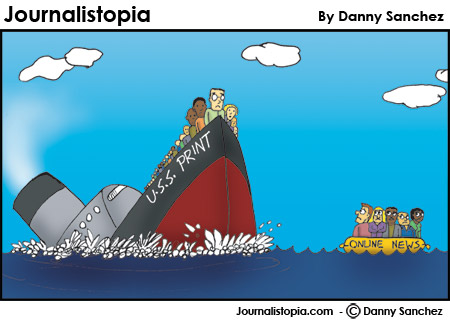
Would the emergence of e-books threaten print media? That is the question that publishers are pondering. However some media pundits predict that old media would still exist as different audiences have different likings on how they get their information (Paterson 2008).

But it cannot be denied that there would still be competition between the two forms of media. How would they survive together?


Image Source: USS Print
Would print media sink?

According to Mercieca (2004) the popularity of the e-book is increasing by the day as it is preferred by the younger generation who spend most of their time facing the computer.


Image Source: Amazon_Kindle
Will Kindle rise to be the ultimate reading source or will traditional print prevail?

Technology advancements, the rising cost of traditional text books and the easiness of searching and gaining excess also play in the favour of e-books. The global and popular acceptance of the e-book is shown by the statistics where one in four men and one in six women intend to buy an e-reader before the end of the year (Greenberg 2009).

But even though the Kindle is a well-received device, books are still undeniably in popular demand. People from certain age group such as the older people would prefer reading from books to spending time in front of the computer as it is easier on the eye (Penman 1998).

Mercieca (2004) shares that it is possible to carry around books in their physical form and readers would find it easier to browse through contents. It is also proven that audience tend to skim read on screen, and the reading process would be 25% to 40% slower than from the printed books. Schriver (1997) concurs that “better technology does not equal better communication”.


Image Source: Home_photo_books
Will traditional books retain its number one status at people's reading choice?

Therefore Naughton (2006) predicts that people have bigger response on the new media (e-book) but would prefer to get back to old nature of the old media. Lannon (1997) also agrees that the e-book is just a tool and not a substitute for human interaction.

With all that being said, the survival of both books and e-books will continue to rise as both are in popular demand.

References
Abbott, C. 2009, 'The New Book Buying Realities', Follow The Reader, viewed November 14 2009, http://followthereader.wordpress.com/2009/05/14/bowker-reveals-new-book-buying-realities/

Greenberg, A. 2009, 'The coming e-book boom', Forbes.com, viewed November 14 2009, http://www.financialpost.com/news-sectors/technology/story.html?id=2087178

Harvey, M. 2009, 'International version of Kindle out for Christmas', The Times, viewed November 14 2009, http://www.theaustralian.com.au/business/news/international-version-of-kindle-out-for-christmas/story-e6frg90o-1225784098422

Lannon, J. 1997, The writing process: a concise rhetoric, New York, viewed November 14 2009, http://books.google.com.my/books?id=BOWfgoVOVkoC&q=J.+Lannon,+1997&dq=J.+Lannon,+199

Mercieca, P. 2004, E-book acceptance: what will make users read on screen?, viewed on November 14 2009, www.vala.org.au/vala2004/2004pdfs/32Merci.PDF

Naughton, J., 2006, 'Blogging and the emerging media ecosystem', University of Oxford, viewed November 14 2009, http://reutersinstitute.politics.ox.ac.uk/fileadmin/documents/discussion/blogging.pdf

Paterson, R. 2008, 'Getting from Here to There – How Torey Malatia is solving the Innovator’s Dilemma', Fastforwardblog.com, viewed November 14 2009, http://www.fastforwardblog.com/category/torey-malatia/

Penman, R. 1998, 'Document structures and readers’ habits', Communication news, vol 11, no. 2, pp. 1 & 10-11.

Schriver, K.A. 1997, ‘Chap 6: The interplay of words and pictures’ in Dynamics in document design: creating texts for readers, pp. 361-441, Wiley Computer Publishing, New York.

Friday, November 13, 2009

New forms of media publishing

The Internet and Web 2.0 has made possible the wide sharing of information of everything imaginable from anyone to everyone in the world, in just a few clicks.

This includes anything from hard news to social communication between family and friends as the Internet is a fast and wide-spread platform for heavy information-sharing. It is boosted by the availability of Web 2.0 applications such as Twitter, used to share on-the-spot news and pictures without having to go through a gatekeeper.


Image Source: Twitter-Logo
Twitter networks millions of people globally;

can you imagine the spread and impact of a major global rumour?

Therefore it enables the Internet to become one of the most common media outlets for journalism as publishing becomes almost free.

Online journalism are constantly bettering their standards as expectations from the audience grow; it has to be fast and credible as it becomes the top choice for news-searching and news-gathering as compared to traditional media which takes up to a day (for newspapers) or hours (for television) to report (Anderson 2009).

As in the recent case of Michael Jackson’s death in June 2009, Twitter and even Google experienced a crash due to heavy usage of information-searchers (Schofield 2009)! This shows how popular the Internet is as a search engine.


Image source: google_layered
Google experienced a major crash on the day

the world first heard rumours of Michael Jackson's death

As more and more information are put on the Web every day, there is no doubt that the issue of private data sharing would be brought up sooner or later. As netizens, we all want to keep our private data private, choose what we want to publish, and also retain the right to delete any information about us whenever we want.

But the rules of new media do not play like that.

According to author and Professor Yochai Benkler as quoted in Naughton (2006, p. 1), the output of new media is not exclusive property. Rather, it is “subjected to an increasingly robust ethic of open sharing, open for all others to build on, extend and make their own.”

But Facebook, worried about the legal issues it might face one day, has come out with several updates of their ‘Terms and Conditions’, including a clause to ‘being able to retain (our) data forever’ (Facebook: We own your content forever, and ever 2009).


Image Source: Facebook-logo
Facebook prepares for future legal issues by including tight clauses

And although a T&C of Twitter state that we can delete our text and images forever when we delete our account, there is also a final clause of ‘reserving the right…to refuse service to anyone for any reason at any time’ (Bennett 2009).

Therefore, Net users must always be constantly aware of the blurring grey areas of the Internet before clicking Enter.

References
Anderson, K. 2009, ‘@media140: How Twitter is challenging the news gatherers’, Guardian, UK, viewed November 13 2009, http://www.guardian.co.uk/technology/blog/2009/may/20/media140-twitter-journalism

Bennett, S. 2009, 'Who Owns Your Tweets – Twitter, You Or Anyone?', Blog of Mr. Tweet, viewed November 13 2009, http://blog.mrtweet.net/who-owns-your-tweets-twitter-you-or-anyone

Facebook: We own your content forever, and ever 2009, Neowin.net, viewed November 13 2009, http://www.neowin.net/news/main/09/02/16/facebook-we-own-your-content-forever-and-ever

Naughton, J. 2006, Blogging and the emerging media ecosystem, University of Oxford, viewed November 13 2009, http://reutersinstitute.politics.ox.ac.uk/fileadmin/documents/discussion/blogging.pdf

Schofield, J. 2009, ‘Michael Jackson, the Twitter effect, and the 'science' of reporting’, Guardian UK, viewed November 13 2009, http://www.guardian.co.uk/technology/blog/2009/jun/26/michaeljackson-twitter-blogs-reporting